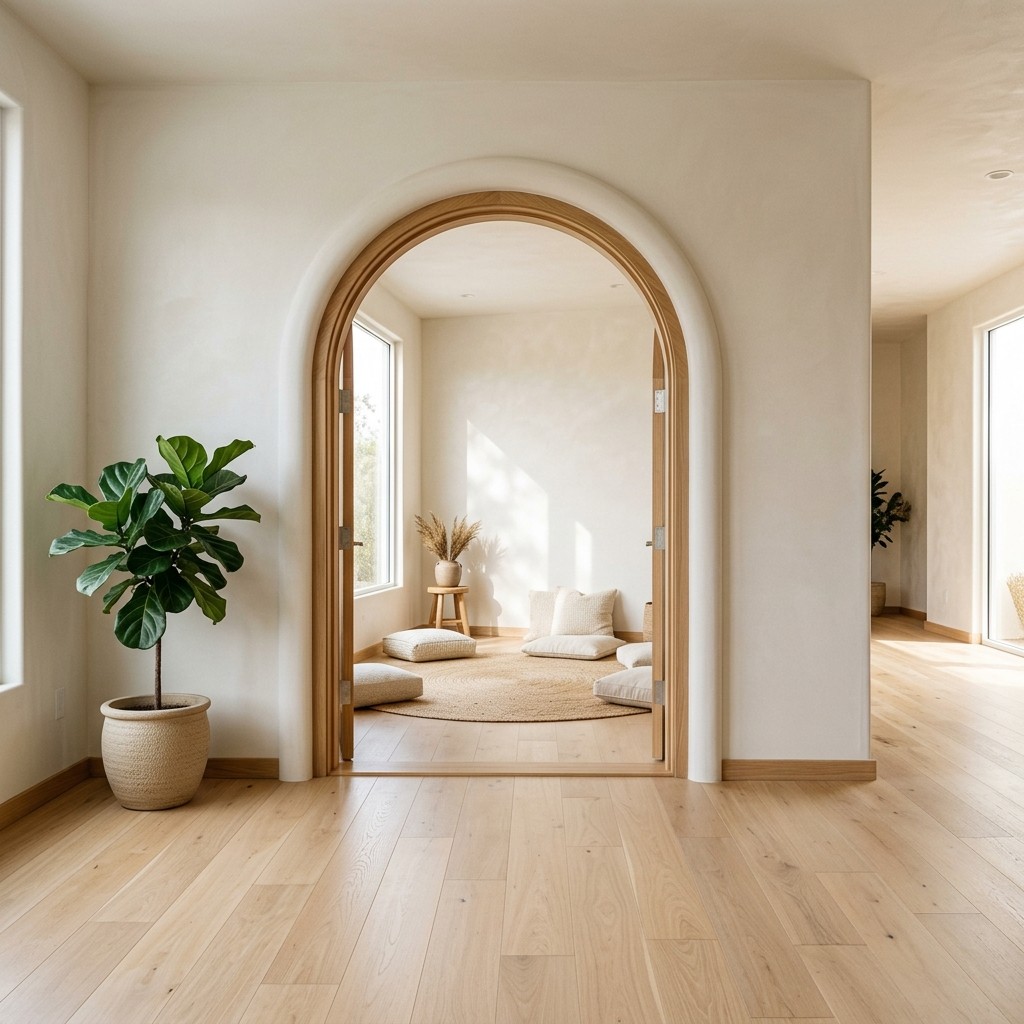
The way a space feels changes the way you think, breathe, and move inside it.
Walk into a well-designed yoga studio or meditation room and something shifts before you've done anything at all. The light is softer. The clutter is gone. The air seems to slow down. That response isn't accidental — it's designed. And the principles behind it aren't reserved for commercial wellness spaces. They work just as powerfully in a living room, a bedroom, or a corner of your apartment that you've decided, finally, to treat as sacred.
What Studio Designers Actually Optimize For
Professional wellness space designers think in terms of nervous system response, not just aesthetics. Every decision — lighting temperature, ceiling height, material texture, scent, sound absorption — is made in service of one question: does this help people arrive, or does it keep them on edge?
The answer usually comes down to reducing sensory friction. Hard surfaces that echo, overhead fluorescent lighting, visual clutter, synthetic materials — these all maintain a low-grade alertness that prevents genuine rest. Soft surfaces absorb sound. Warm lighting below eye level signals evening and safety. Natural textures — wood, linen, stone, clay — register as familiar to a nervous system that evolved outdoors. You can apply every one of these principles to a domestic space without a renovation budget.
Light Is the First Variable
If you change nothing else about a room, change how it's lit. Overhead lighting — the default in most homes — is the least flattering and most activating source available. It mimics the high sun of midday, which is useful for a kitchen at noon and counterproductive for a living room at 8pm.
Move your light sources down and toward the periphery. Floor lamps, table lamps, candles, and LED strip lighting behind furniture all create the low-angle, warm-toned light that signals the body to shift into parasympathetic mode. Use bulbs in the 2700K–3000K range for living spaces. Reserve bright, cool-toned overhead light for workspaces and tasks. This single change — which costs almost nothing — will make your home feel measurably different within a day.
Editing as Interior Design
The most transformative design move in most homes isn't adding anything. It's removing. Visual clutter is cognitive load. Every object in your peripheral vision that doesn't need to be there is a micro-demand on your attention — a small, silent task waiting to be completed. Multiplied across a hundred objects in a room, it accumulates into a baseline tension that most people don't even notice until it's gone.
Go through one room with a single question: does this object serve a function, bring genuine pleasure, or earn its place? Anything that doesn't clear at least one of those bars is friction you're paying for daily. Surfaces should breathe. Floors should have clear paths. Shelves should have space between things. A room that has been edited feels larger, quieter, and more alive than one that has simply been cleaned.
Anchoring the Senses
Sanctuaries work because they engage the senses deliberately rather than accidentally. A studio smells like cedarwood or eucalyptus not for luxury but because scent is the fastest pathway to the limbic system — the emotional and memory centre of the brain. A single diffuser with a consistent scent can train your nervous system to associate a space with calm, the same way a specific playlist can anchor a mood.
Sound works similarly. Hard floors, bare walls, and high ceilings create acoustic environments that feel anxious and exposed. Rugs, curtains, bookshelves, soft furnishings, and plants all absorb sound and bring the room into a more intimate register. You don't need acoustic panels — you need texture. Add softness to floors and walls and the room will quieten itself.
Designating the Space Within the Space
You may not have a dedicated room for rest, practice, or reflection. That's fine. A sanctuary doesn't require square footage — it requires intention. A single armchair by a window with a small side table and good lamp can become a consistent cue for reading, stillness, or morning reflection if you treat it that way. A corner of a bedroom with a candle, a mat, and nothing on the floor can hold a meditation practice.
The key is consistency. The brain is responsive to environmental cues, and a space used repeatedly for the same intentional purpose becomes neurologically associated with that state. You walk to your chair and your shoulders drop. You light the candle and your breathing slows. The space does some of the work for you — but only if you've told it what to do.
The Home You Actually Live In
The goal isn't a showroom or a Pinterest board. It's a home that actively supports the person you're trying to be — one that lowers the cost of rest, focus, and presence rather than adding to it. That might mean one beautifully arranged shelf instead of four crowded ones. A bedroom with nothing on the floor. A kitchen where cooking feels like a pleasure rather than a logistical problem.
Design your home the way a good studio is designed: with full respect for how a human nervous system actually works. The space you inhabit shapes the person inhabiting it — far more than most of us realize, and far more than any single habit ever could.